
Karen Sharpe

London Trail for Shaun The Sheep

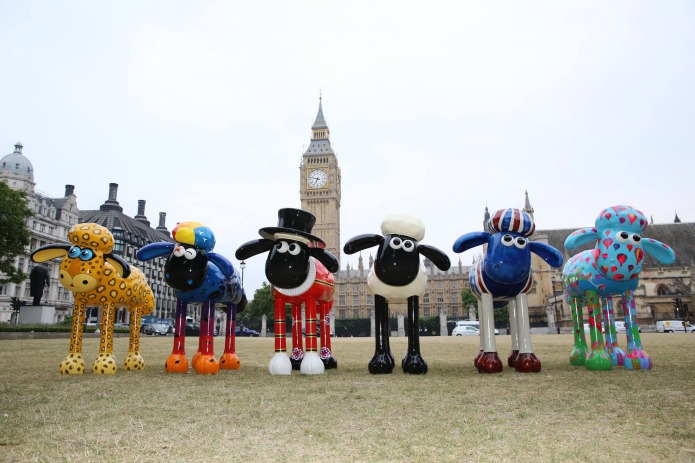
The London trail for Shaun the Sheep (Nick Park – Wallace and Gromit spin off) will take place from 28 March to 25 May and will feature 60 5ft high Shaun the Sheep sculptures, decorated by celebrities and artists.

Key central locations to feature around the capital include One New Change (a shocking pink sheep by Zandra Rhodes named ‘Woolly Wiggle’ featuring the artist’s distinctive gold ‘wiggle’ pattern), Westminster, Southbank and other iconic tourist destinations.

After the London trail, a further trail of 60 giant Shaun the Sheep sculptures will be displayed in Bristol during July and August.

In autumn 2015, the flocks will go on display to the general public prior to a grand auction to raise money for sick children in hospitals across the UK. 
Shaun In The City

Shaun In The City in Parliament Square near Westminster Palace. Photo: ©ShaunInTheCity.

Karen Sharpe

I was born in London and have lived there for most of my life although I have now ‘decamped’ to what is known as the suburbs.
I have worked for an antiques removal/shipping company before joining the Metropolitan Police Force where I enjoyed a varied career for 14years. Since leaving I followed up…

Leave a Reply

Your email address will not be published. Required fields are marked *

You may also like

Top 10 Facts About The City Of London

London covers 600 square miles and has a population of 8.6 million, but only its oldest part, just one square mile in size, is called the City of London. That is where the Romans founded the city of Londinium shortly after they arrived in 43AD. Today, the City of London – or simply “the City” – is the centre of London’s finance industry. The City is where you find the Bank of England, the London Stock Exchange, the investment banks, insurance companies and financial markets. It combines the most modern headquarters buildings with Roman remains and medieval churches, and it is great to explore on foot.

Read more

Historic Cinema Buildings In London

Since its inception in the first part of the 20th century, the cinema has been a staple of British entertainment. The multiplexes of the 21st century have enjoyed a resurgence following the nadir of the 1980s and early 1990s, but the real golden age of cinema came with the development of the “talkies” in 1927 and the subsequent boom in the construction of new cinemas in the 1930s.

Read more