



In 1866 the Blue Plaque scheme was founded by the Society of Arts and so this year they celebrate their 150th anniversary. Now managed by English Heritage, London’s blue plaques are handmade in Cornwall by the Ashworth family. The first blue plaque was awarded to the poet Lord Byron in 1867, but his house in Holles Street, was demolished in 1889 – today it is the site of John Lewis department store.
The oldest surviving plaque, just off St James’s Square, commemorates the French Emperor Napoleon III and, like Byron’s plaque, was installed in 1867. The French imperial eagle is part of its design; when it went up, Napoleon was not only still alive, but still ruling France – today the criteria is that the person must have been dead for 20 years before a plaque is erected. What is interesting is that only 13% of London’s blue plaques are dedicated to women and they are currently looking/seeking to increase that number.
To find out more about London’s 900+ blue plaques, visit the English Heritage website.
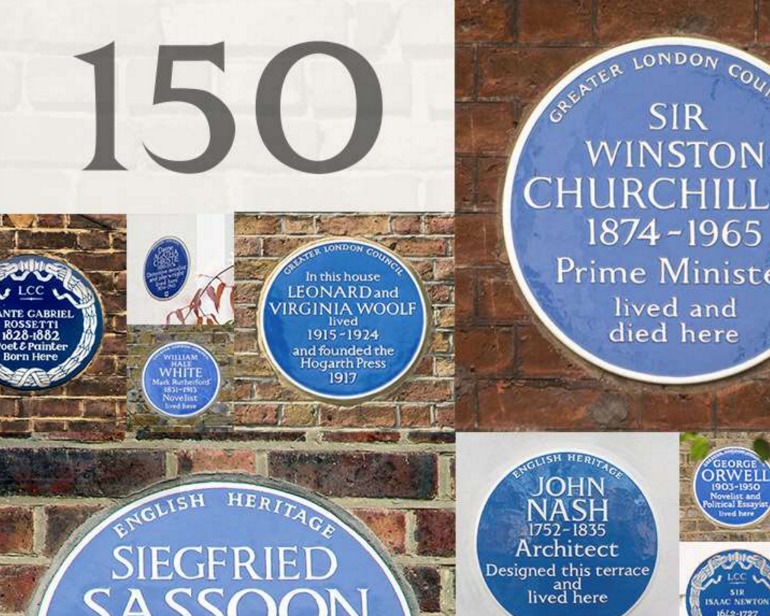
English Heritage – 150th Anniversary of Blue Plaques. Photo Credit: ©English Heritage.


Leave a Reply